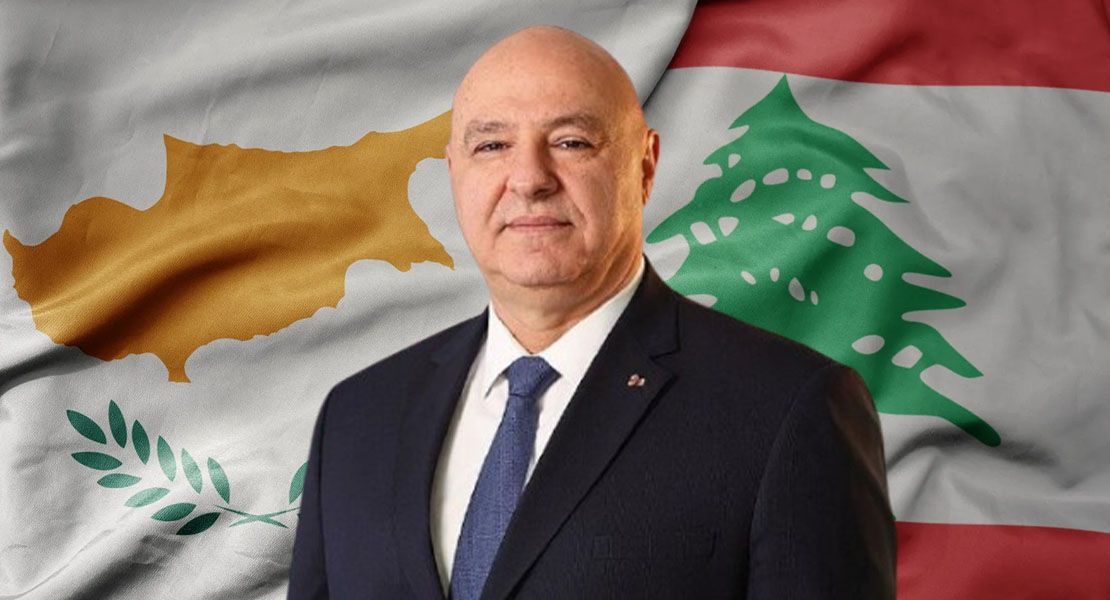
President Joseph Aoun’s speech at the informal meeting of European Union leaders in Cyprus:
“President and friend Nikos,
Leaders of the European Union,
Your Excellency the Secretary-General of the Gulf Cooperation Council,
Your Excellencies,
Ladies and gentlemen,
Allow me first to extend my thanks to Cyprus, which holds the presidency of the European Union, for hosting us at this critically important moment, and to express my appreciation to all the leaders present for their continued engagement with the issues of the region. For many years, our region has been associated in the minds of the world with wars, conflicts, and images of suffering. But that image, harsh as it is, does not capture the whole truth of who we are. Throughout history, this region has been a space for commercial and cultural exchange and for encounters among peoples. The sea that unites us — the Mediterranean — was a route of life, communication, and prosperity. Today, however, the true cost of what we are living through is measured not only by the scale of destruction, but by what we are losing in opportunities for integration and in the potential for shared growth.
That is why our responsibility today — as leaders — is not limited to managing crises. It extends to changing this course, to redefining what this region represents, and to moving from the logic of conflict to the logic of opportunity, from division to integration, and from managing pain to creating hope.
Lebanon perhaps embodies this reality in all its complexity and challenges, as it finds itself in the midst of a war it did not choose, at a time when it had not yet recovered from successive crises. What had begun as a path of economic recovery and reform is now suffering a new setback. In this context, over recent months the Lebanese government has taken decisive steps to strengthen its sovereignty, foremost among them entrenching the principle that decisions of war and peace, and the exclusive possession of arms, belong to the state and its legitimate institutions. In parallel, Lebanon has engaged in a diplomatic negotiating track under United States sponsorship, with the support of the European Union and Arab countries, aimed at reaching a sustainable solution that puts an end to Israeli attacks and leads to a full Israeli withdrawal behind internationally recognized borders, thereby enabling the state to extend its authority over all its territory.
Lebanon today refuses to be a bargaining chip in regional conflicts. It negotiates in its own name, in defense of its national interests and sovereignty.
While these diplomatic efforts continue, the humanitarian situation on the ground remains extremely dangerous. More than 1,300 evacuation orders have been issued, covering 311 towns, and more than 6,800 airstrikes had been recorded up to April 11. This has resulted in more than 10,000 casualties, dead and wounded, including a large proportion of women, children, and people with special needs. At the same time, Israel continues to violate international law by targeting medical teams, hospitals, educational institutions, journalists, and places of worship, in addition to the systematic destruction of villages and civilian infrastructure, with the aim of preventing residents from returning to their homes. The number of displaced has exceeded one million people, only 13% of whom are in shelters, most of which are public schools and universities, increasing pressure on the education system and on the state in general. Lebanon is still hosting nearly one million displaced Syrians, while local communities bear the greatest burden. This is not a conventional humanitarian crisis; it is an existential crisis by every measure. These humanitarian realities reflect the scale of the accelerating destruction.
According to a preliminary World Bank assessment, damage to infrastructure and housing during just one month reached about $1.4 billion, not including the major escalation on April 8, when Lebanon was subjected to more than 100 strikes in less than ten minutes. So far, around 38,000 housing units have been destroyed, and it is expected that more than 150,000 people will have no homes to return to after the war ends. These staggering figures come on top of the cost of the previous war, which the World Bank estimated at around $14 billion.
Today, growth has turned into contraction, with GDP expected to decline by about 7.5%, inflation rising to around 15%, and social indicators continuing to deteriorate. Yet despite these pressures, Lebanon is responding, and that response is being led by the state, coordinated among various institutions, and supported by digital systems that ensure transparency. In this context, Lebanon’s relationship with Europe is becoming increasingly important, and we would like here to express our appreciation for the continued political support provided by the European Union and sister Arab states for Lebanon’s sovereignty, unity, and independence, as well as for their ongoing humanitarian support.
Lebanon is not merely a humanitarian case; it is directly linked to issues of regional stability, migration, counterterrorism, energy security, and geopolitical balances. In this framework, we see clear areas for enhanced cooperation.
First, in the field of energy: amid rising prices and disrupted supplies, the stability of our region has become an essential element in the stability of global markets, while freedom of navigation and the security of maritime corridors have become pillars of global economic security. Here, Lebanon is ready to contribute to strengthening connectivity and resilience in the Eastern Mediterranean.
Second, on the economic level: promising opportunities for cooperation are emerging. With its geographic location, ports, and proximity to regional markets, Lebanon can serve as a platform for trade, logistics services, and reconstruction efforts in Lebanon and the region, supported by a system of institutions and expertise capable of effectively advancing these efforts. At the same time, Lebanon remains committed to economic reform and to strengthening its partnership with the European Union. We believe this partnership can go beyond aid to include investment, cooperation, and joint strategic initiatives. To translate this potential into tangible results, allow me to outline a number of key priorities:
We call on the European Union to convene an international conference dedicated to reconstruction and recovery. At the same time, we stress the need to strengthen humanitarian funding in light of growing needs and continued resource constraints, particularly to support host communities and basic services. We also emphasize the importance of reactivating the conference in support of the Lebanese Army, for which we thank France for its initiative, given that the army is the guarantor of national unity and a fundamental pillar of local and regional stability. We express our appreciation to all countries participating in UNIFIL, pay tribute to those who fell in the cause of peace, and also affirm our interest in preserving a European presence in Lebanon, including the possibility of establishing a European mission after the end of UNIFIL’s mandate, to ensure continued support for stability and security.
With regard to the displacement file, we stress the need to work in coordination with the Syrian authorities and with the support of international partners to intensify efforts that would enable the safe and dignified return of displaced Syrians, who place heavy pressure on infrastructure, services, and host communities. In light of Syria’s recovery and stabilization, we see a real opportunity to make progress on this path in a gradual and organized manner.
Distinguished attendees,
Lebanon today stands at a decisive crossroads. The choices we make together in the coming phase will not only determine Lebanon’s path, but will also affect the stability of our region and the future of our peoples. Like the other countries of the region, Lebanon places great importance on de-escalation and on establishing stability and peace, out of its conviction that diplomacy, not escalation, is the only path to a sustainable solution. With the right support, Lebanon can move beyond crisis management and play a constructive role in regional recovery, economic connectivity, and long-term stability. We look to our partners not only for support, but for a deeper partnership based on shared interests and mutual responsibility.
Lebanon is ready and determined to move forward, and we are counting on your support to achieve that.”