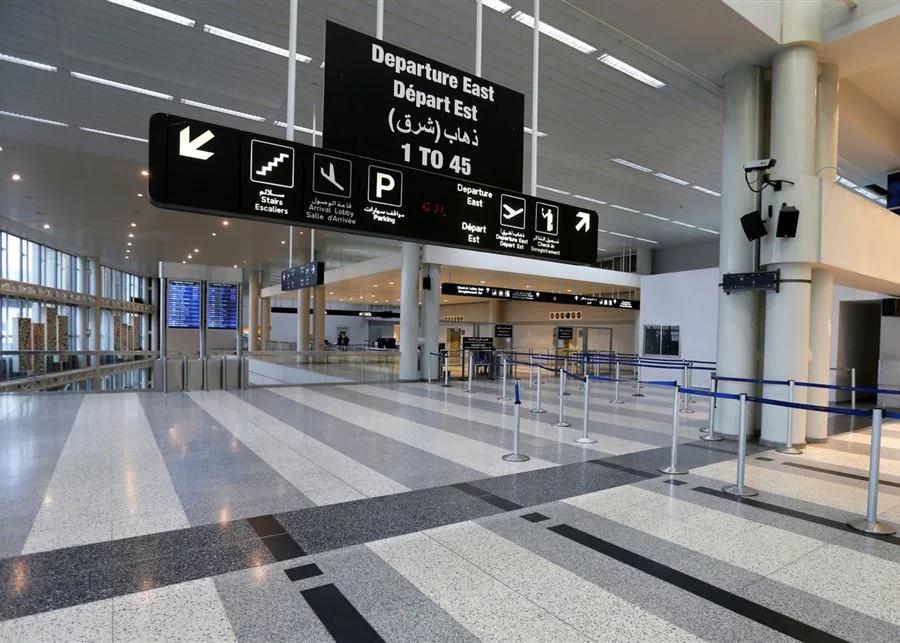
Captain Mohammed Aziz, head of the General Directorate of Civil Aviation, told Al-Anbaa that “traffic at Rafik Hariri International Airport is gradually improving,” noting that four airlines have already resumed operating flights to Beirut, while three additional carriers are expected to join during this week, in parallel with Middle East Airlines resuming flights to destinations whose airports have reopened.
This improvement comes after air traffic fell by nearly 70% during the period of escalation, as a result of a large number of Arab and foreign airlines suspending their flights to and from Lebanon, before signs of recovery began to emerge with the ceasefire taking effect.
On the ground, the Lebanese Army continued its movements in the south, with Army Command announcing that specialized units had worked to fully reopen the Khardali-Nabatieh road and partially reopen the برج رحال-Tyre bridge, in addition to continuing work to rehabilitate the Tayr Falsayh-Tyre bridge in cooperation with the Litani River National Authority, following damage to infrastructure caused by Israeli strikes.
The command confirmed that the army is continuing to reopen roads and remove obstacles, alongside carrying out security missions, as part of efforts to protect internal stability and facilitate movement between regions.
In parallel with these measures, the roads leading to the south witnessed heavy congestion, recalling scenes of displacement during the wars of 2024 and 2026. However, most residents who returned to check on their villages were unable to stay because of the widespread destruction of their homes, prompting them to return once again to their places of displacement.
Politically, internal and external support emerged for the presidency and the government. President Joseph Aoun received a phone call from Egyptian President Abdel Fattah el-Sisi, during which he affirmed his country’s support for Lebanese steps aimed at halting the escalation, particularly negotiations seeking to stop military operations, secure the withdrawal of Israeli forces from the south, and deploy the Lebanese Army up to the border.
For his part, Maronite Patriarch Cardinal Bechara al-Rahi stressed the need to turn the truce into a permanent end to the war, calling for dialogue and negotiations under the authority of the state and reaffirming his rejection of the continuation of the war.
Meanwhile, Israel’s Channel 12, citing sources, reported that the Israeli army controls about one-third of the area stretching between the border and the Litani River, while the National News Agency said Israeli forces blew up homes in the towns of Al-Biyada and Naqoura and blocked secondary roads in the western sector with earth mounds.
These developments come amid a temporary 10-day truce, as intensive Lebanese and international efforts continue to consolidate it and prevent its collapse, at a time when field indicators still point to the fragility of the security situation, with military operations continuing in some southern areas.
The Lebanese state faces major challenges in the post-escalation phase, foremost among them rehabilitating damaged infrastructure, especially roads and bridges that constitute vital arteries for residents’ lives, in addition to ensuring a safe and sustainable return for the displaced.
The deployment of the Lebanese Army up to the southern border is considered one of the most prominent elements of any anticipated settlement, as it constitutes a fundamental pillar for asserting state authority and strengthening stability, a step that is receiving growing Arab and international support.
At the same time, this phase intersects with broader regional developments, particularly the ongoing tension between the United States and Iran and its potential repercussions on the Lebanese scene, making the current truce a delicate test of the possibility of moving from temporary de-escalation to long-term stability.
On the economic level, the improvement in airport traffic is considered an initial indicator of a gradual return of activity, but this recovery remains directly linked to the level of security and political stability in the country.