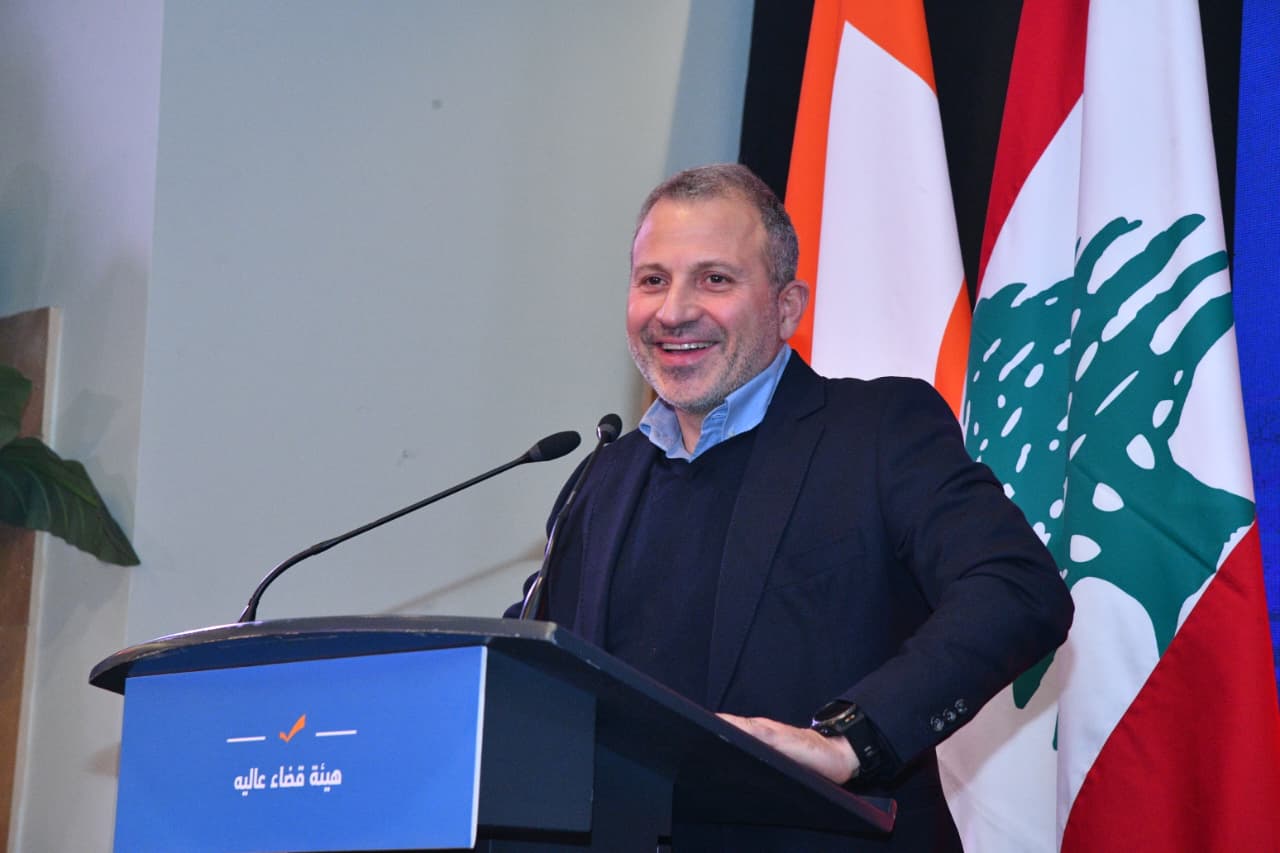
Free Patriotic Movement leader MP Gebran Bassil, in an interview with Al-Ghad TV and journalist Sami Kleib, stated that it is impossible to predict the duration of the current war, particularly since Israeli Prime Minister Benjamin Netanyahu’s policy is one of continued conflict. He warned that with elections in October, Netanyahu cannot stop the machinery that extends his tenure in office, portraying himself as a “Ben-Gurion” figure and believing he can impose peace by force, while true peace can only be built on rights and survival.
Bassil emphasized that “the stronger the resistance in Lebanon stands, the harsher Israel becomes.” He expressed concern over the separation of southern Litani from Lebanon, noting that Israel is aware that the rockets launched reach up to 160 km, making the security belt ineffective. He added: “Israel has never hidden its desire for Lebanese territory, the regional trajectory is unstable, and the Greater Israel project is clear; current military actions point in this direction.”
He further stated: “The ethnic cleansing taking place is extremely dangerous. We want all Lebanese—Christians and non-Christians—to remain in their land, without discrimination.”
Regarding Iran linking its negotiations with the United States and Israel to Lebanon, Bassil stressed that Lebanon must be kept away from regional proxy conflicts. “Any attempt to tie Lebanon to someone else’s war makes Lebanese bear the cost, and no one can guarantee the outcome of that war by involving us,” he said.
Referring to the Gaza support war, he added: “Iran did not defend Lebanon when it was attacked.” He noted that while linking the two issues may benefit Hezbollah and its base, it is uncertain if the war will end as they wish. He said: “If Iranian power can force Israel to stop the war with Lebanon and withdraw from our lands, that is good—but everyone knows Israel does not want to stop the war, even with Iran, unless pressured by the U.S. Can Iran really force Israel to tie Lebanon to its negotiations?”
Bassil affirmed there is no possibility for Iran or Hezbollah to achieve outright victory over the U.S. or Israel, but there is potential for resilience. “If Hezbollah uses this resilience to liberate territory and integrate within the state, that is positive. But if it uses its strength for its own agenda at the expense of the state, that is not acceptable,” he said.
He stressed that Hezbollah did not slip into war alone; it dragged the entire country into conflict. Since the Gaza support war, Lebanon has faced economic damage, emigration, and other challenges. “We cannot fight someone else’s war on our soil,” he added.
Bassil underlined that responsibilities are shared: the aggressor, Hezbollah, and ultimately the state, which has demonstrated incapacity to manage the file, losing credibility internally and externally while offering hollow promises. He stressed: “Despite this, we follow legitimacy, support the policy of keeping weapons under state control, but all of this must be within a comprehensive government plan, which has yet to be implemented.”
He criticized promises made abroad as unrealistic, stating the army is left alone without guidance. “The government raised the ceiling of its decisions because it promised and committed to matters beyond its capacity,” Bassil said.
Responding to Hezbollah’s political deputy Mahmoud Qomati, Bassil said: “He condemns himself by participating in the government and granting it confidence. Any threat to Lebanese citizens, especially by armed actors, is unacceptable. We reject Hezbollah threatening civil war or retaliatory actions, and at the same time, incitement against Hezbollah’s base is unacceptable. Lebanon’s greatest resilience comes from how we deal with each other during crises.”
On claims that disarming Hezbollah domestically would be cheaper than a war with Israel, Bassil cited President Michel Aoun: “A hundred days of fighting abroad are preferable to a single day of internal conflict.” He emphasized the need to arm and strengthen the Lebanese army to prevent internal strife and break external dependencies.
He added: “The solution must be Lebanese-driven. Unfortunately, there is American alignment with Israeli policies. Who thinks rationally about attacking the Lebanese army? Have they been given the capacity? They are given a recipe for division. I challenged them to give the army a clear, not ambiguous, order—the army does not operate on slogans.”
He warned against misleading claims about the army’s ability to disarm Hezbollah and condemned calls for Syrian intervention or facilitating Israel. “We are in a dangerous situation; internal clashes are forbidden,” he said.
On direct negotiations with Israel, Bassil said he understands President Michel Aoun’s caution to avoid the specter of war, but he stressed negotiations must not be symbolic or legitimizing occupation. “I support talks that establish true, fair, and lasting peace, restoring Lebanon’s land, water, gas rights, and return of Palestinian and Syrian refugees. But negotiations aimed solely at legitimizing occupation are unacceptable,” he said. He emphasized that Lebanon is at war and the political authorities must develop a full plan to defend Lebanon and restore its rights.
Bassil added: “I do not want temporary solutions; we submitted a seven-point paper for a fair and lasting peace. We cannot return to 2023, but if we agree as Lebanese, we can pursue peace and a defense balance involving major powers like the U.S. to protect Lebanon.”
Regarding Speaker Nabih Berri’s stance, Bassil said: “Berri has experience in this matter. He has not rejected the principle of negotiations but links it to a ceasefire, return of refugees, and security guarantees. If negotiations do not ensure these, they cannot proceed.”
On Syrian troop movements near Lebanon, Bassil expressed concern: “Some powers encourage Syrian President Bashar al-Shar’ to participate in disarming Hezbollah. The dispute is between two projects: one aims to divide states, the other to maintain the region as is. This is the problem between the U.S. and Israel versus Israel and Gulf states.”
Regarding President al-Shar’, Bassil said: “There is a clear shift between capacity and willingness. His rhetoric is reassuring, but internal and external pressures remain. His commitment to Syria’s unity is positive, and any intervention in Lebanon must avoid harming Lebanon’s unity, which would spill over into Syria.”
He warned of three major threats that could inadvertently strengthen Hezbollah: extensive Israeli occupation of Lebanon, internal fighting leading to chaos, and Syrian intervention legitimizing armed actors. He welcomed al-Shar’s reassuring statements.
Bassil revealed that he coordinated with Gulf friends to ensure Lebanese-Syrian relations remain disciplined, while addressing Gulf grievances over recent Lebanese developments. “Our responsibility is solidarity and ensuring no harm comes from Lebanon to Gulf states,” he said.
He also warned of a Sunni-Shia sectarian plot, emphasizing that Iranian pressure could have been applied without attacking Gulf states. “Missiles hitting Gulf countries harm Lebanese interests. Iran’s pressure by other means would be more effective. My duty as a Lebanese is solidarity with Arab states.”
On UAE attacks, Bassil stated: “Any aggression against the UAE is completely unacceptable. There is a dimension related to the Belt and Road routes and the India–Fujairah corridor. Whoever controls these routes controls global oil flows, benefiting China. There is also an American agenda in the region with economic dimensions extending from Iran to China, recognizing that controlling these corridors controls the global economy.”
He criticized the Lebanese foreign ministry for limited diplomatic action. “When I was foreign minister, I filed a complaint against Israel at the International Criminal Court. It is unacceptable to do nothing and only see one side of the war. Regardless of my anger at Hezbollah, a foreign army attacks us. At minimum, we must defend Lebanon,” Bassil said. He concluded: “Doesn’t Israel’s action warrant a Security Council complaint or a session convened by the council?”