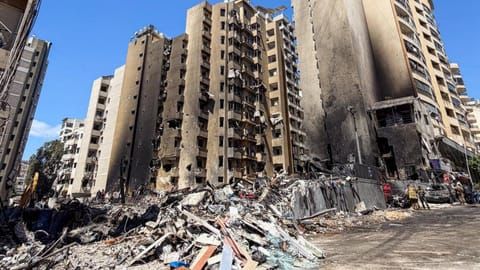
In a statement, UNICEF said that “the escalating hostilities in Lebanon continue to have devastating and inhumane consequences for children. In just a matter of minutes yesterday, as news of a ceasefire agreement in the region briefly revived hope across the country, Israeli airstrikes launched deadly attacks across various parts of Lebanon, reportedly killing 33 children and injuring 153 others. Children and families found themselves facing a wave of intense bombardment that swept through residential neighborhoods and left widespread destruction. This bloody escalation adds to a shocking toll, with the number of children killed or wounded in Lebanon reaching around 600 since clashes resumed on March 2.”
It added: “Amid this violence, UNICEF is receiving reports of children being pulled from beneath the rubble, while others remain missing and separated from their families. Many are suffering from deep psychological trauma after losing loved ones, their homes, and every sense of safety. More than one million people have been displaced across the country, including an estimated 390,000 children, many of whom have now been displaced for the second, third, or even fourth time. In the face of this reality, international humanitarian law remains clear: civilians, including children, must be protected at all times. All parties to the conflict must take every possible precaution to protect civilians and civilian infrastructure, and ensure the safe, sustained, and unhindered delivery of humanitarian aid. The use of explosive weapons with wide-area effects in densely populated areas poses a deadly threat to children and must stop immediately.”
It continued: “In direct response to the growing needs, UNICEF is on the ground in Beirut, where many injured children are receiving treatment through the UNICEF-supported Assistance and Care for War-Wounded and Affected Children (ACWA) program. As needs continue to rise, our teams are working to scale up the emergency response by delivering essential supplies to shelters, providing medical supplies to public health facilities, and offering urgent care to displaced families through mobile units.”
It concluded: “While ceasefire efforts elsewhere have helped calm the situation to some extent, the continued military activity in Lebanon, as the United Nations Secretary-General noted earlier today, poses a grave risk to consolidating the ceasefire and to efforts aimed at achieving a lasting and comprehensive peace in the region. Lebanon’s children cannot be left to their fate.”