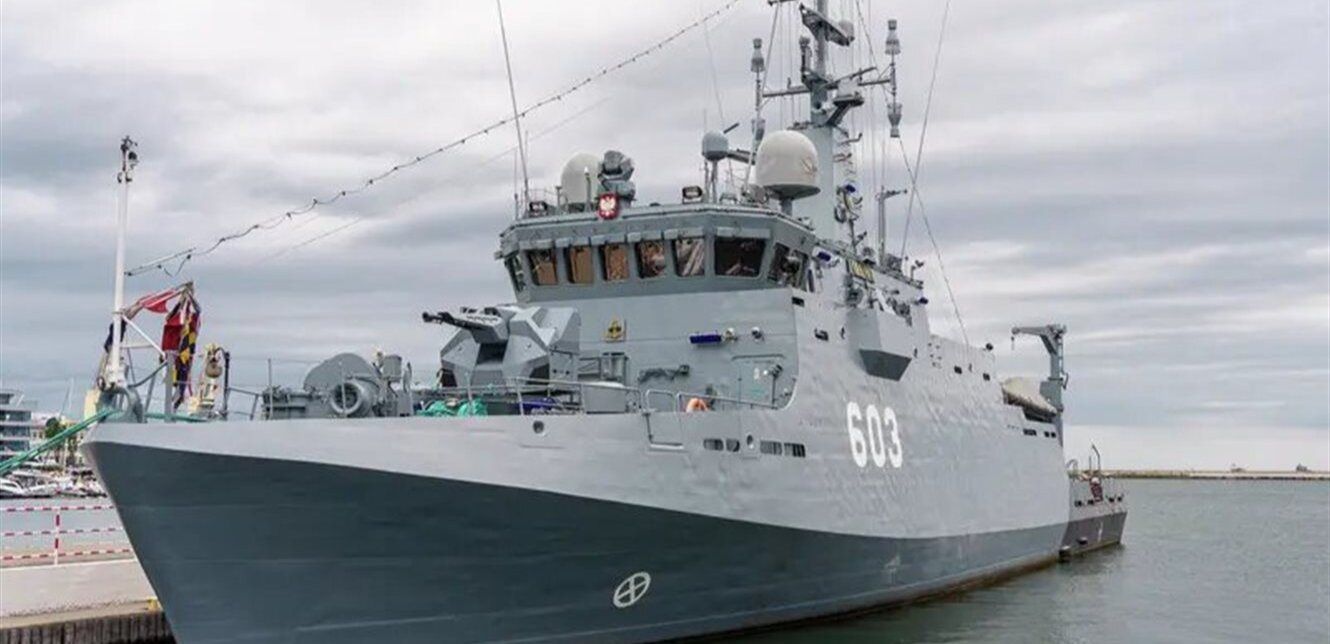
The German vessel FGS Fulda has returned to the spotlight as it prepares to take part in potential missions to secure navigation in the Strait of Hormuz, one of the world’s most important maritime corridors for transporting oil and gas, where any threat carries direct repercussions for global markets.
Fulda belongs to the class of modern minehunter vessels in the German Navy and was specifically designed to deal with invisible dangers beneath the sea’s surface. It relies on advanced technologies that combine high-precision sonar systems with unmanned underwater vehicles, alongside specialized teams capable of dismantling mines or detonating them safely. This type of ship does not operate in a random, conventional manner; rather, it detects targets with high accuracy, reducing risks to commercial vessels and securing vital sea lanes with great efficiency.
The deployment of this ship comes in the context of European and international preparations to confront any scenario that could disrupt navigation in the Strait of Hormuz. This passage is considered a vital artery of global energy, through which a large share of oil exports passes, making any threat to it a source of pressure on the international economy. In this context, Fulda’s mission is expected to include clearing naval mines if they are laid, securing the movement of commercial ships, and supporting multinational operations that may be launched to guarantee freedom of navigation in the region.
The importance of this step is not limited to its military dimension; it extends to political and strategic ones as well, reflecting Germany’s readiness to become more involved in protecting international maritime security, especially in a region marked by recurring tensions and an overlap of regional and international interests. The deployment of ships of this kind also remains tied to sensitive political decisions, given the delicacy of the situation and the potential for escalation.
Fulda’s importance stands out particularly in confronting naval mines, which are among the most dangerous tools of modern warfare. They are low-cost and easy to plant, yet capable of completely paralyzing maritime traffic and threatening civilian and military vessels alike. Hence, the presence of specialized ships capable of detecting and dealing with such mines with precision constitutes a decisive factor in preserving the stability of maritime routes.
Ultimately, Fulda represents an advanced model of the tools used in managing modern maritime conflicts, where precision technology becomes a fundamental element in protecting the global economy. As tensions in the region escalate, the role of this vessel appears likely to be not merely technical, but part of a broader picture reflecting the scale of the challenges facing international maritime security in one of the world’s most sensitive regions.