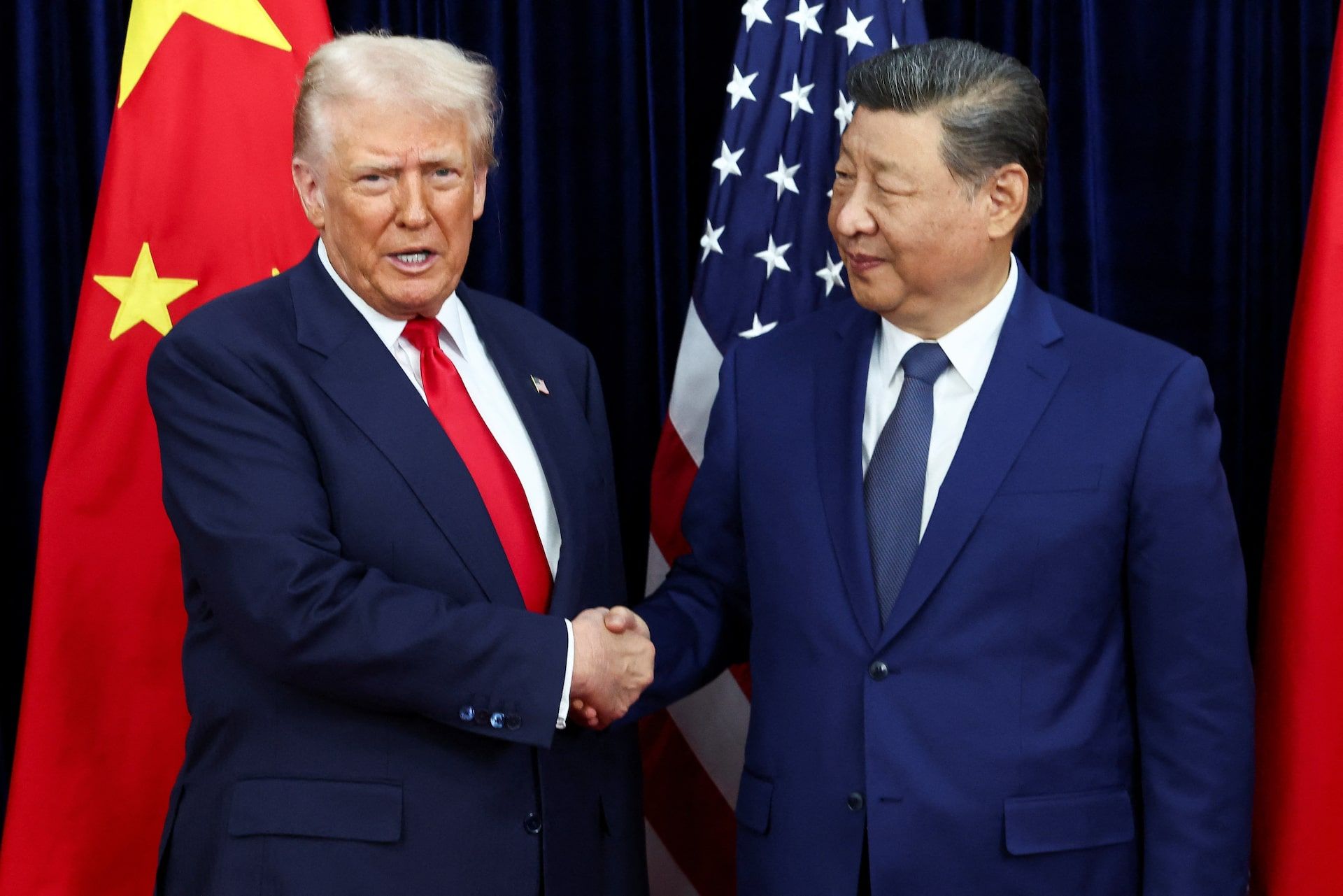
The crisis linked to Iran in the Gulf region is moving toward a transformation from a regional confrontation into a direct pressure point on the structure of the global economy, at a time when military tensions are intersecting with the struggle for influence between the United States and China, placing the Beijing summit between U.S. President Donald Trump and his Chinese counterpart Xi Jinping at the heart of an unprecedented economic and geopolitical test.
According to economic and strategic indicators, the ongoing developments in the Gulf region—particularly those related to the security of navigation in the Strait of Hormuz—have become a central axis in the reassessment of international relations, after energy and supply chains turned into direct pressure tools on major economies rather than merely secondary files in political disputes.
Strait of Hormuz: The Artery of the Global Economy Under Threat
Around one-fifth of global oil supplies passes through the Strait of Hormuz, making it one of the world’s most sensitive maritime corridors. Any disruption to this vital artery usually leads to immediate rises in oil prices, higher shipping and marine insurance costs, as well as direct repercussions for global inflation rates.
The danger of the situation is compounded by the heavy dependence of major Asian economies, foremost among them China, on oil coming from the Middle East, making Gulf stability a decisive factor in the balance of industrial and commercial growth in the region.
China Between Energy Security and Growth Pressures
Beijing faces a complex equation. It is the world’s largest importer of crude oil, at more than 10 million barrels per day, with partial reliance on supplies coming from Iran, which for China represents more than just an energy source, but part of a broader strategic vision tied to the Belt and Road Initiative.
Observers believe that any escalation in the region is directly reflected in the Chinese economy, especially amid the slowdown afflicting the real estate sector, rising local government debt, and weakening domestic consumption, making Beijing’s room for economic maneuver more limited.
The United States: Traditional Influence and Temporary Gains
By contrast, the United States benefits relatively from rising global energy prices, as it has become less dependent on Gulf oil thanks to shale oil production. However, this partial independence does not eliminate domestic effects, as higher oil prices feed into inflation and transportation and food costs—issues that are highly sensitive in the American political landscape.
Even so, Washington retains key instruments of influence, including the power of the dollar, economic sanctions, and naval military deployment, giving it the ability to shape the course of the crisis, even if indirectly.
The Battle of Economic Corridors: A Parallel Global Struggle
Alongside the oil dimension, the importance of the economic “corridor war” among major powers is growing. The United States, in cooperation with regional and European partners, is backing the India-Middle East-Europe Economic Corridor project, which aims to reshape global trade routes and link Asia to Europe through new pathways.
Meanwhile, China continues to strengthen the Belt and Road Initiative, which relies on a vast network of ports and land and sea routes, with the Gulf and Iran forming a pivotal part of it. Accordingly, any disruption in the region directly affects Beijing’s ability to diversify supply routes and reduce its dependence on traditional maritime corridors controlled by American power.
Far-Reaching Repercussions for the Global Economy
The data indicate that tensions in the Gulf are not limited to oil prices, but extend to:
Higher maritime shipping and insurance costs
Disruptions to global supply chains
Increased inflationary pressures in major markets
Declining investor confidence in emerging markets
A reassessment of energy strategies by importing countries
Some indicators have already begun to appear in practice, with a decline in Chinese oil imports during periods of tension and a drop in refined fuel exports, reflecting the fragility of supplies in the face of any geopolitical escalation.
Toward a Global Economic Order That Is More Secure and Less Stable
In sum, the world appears to be heading toward a new phase in which the traditional rules of globalization—based on efficiency and cost—are receding in favor of a model more closely tied to strategic security, where energy, maritime corridors, and technology become decisive elements in shaping economic policies.
Thus, the Beijing summit between Trump and Xi does not appear to be merely a bilateral meeting, but a pivotal moment in determining the shape of the coming global economy, in a world where the economic overlaps with the military, and the commercial with the security sphere, in an unprecedented way not seen in decades.
تابع آخر الأخبار أولاً بأول على قناتنا في واتساب
تابعنا