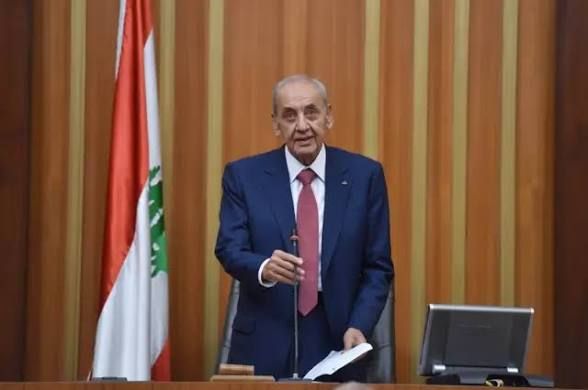
Al-Modon newspaper reported that "the sanctions constituted the harshest blow the Lebanese state has received, and at a deadly moment: U.S. sanctions targeting officers in the Lebanese Army and General Security. It is the first time these institutions have faced such measures. What happened was an exceptionally clear message to the Lebanese state, just days before the military and security meeting to be held at the U.S. Department of Defense between the Lebanese and Israeli armies, to discuss joint coordination on how to implement a plan to disarm Hezbollah and dismantle its military structure. The message was not conveyed through sanctions alone, but also in the fact that the first person targeted by the sanctions was Speaker of Parliament Nabih Berri, through one of his closest advisers, Ahmad Baalbaki, who is known as the person personally responsible for following up on all security and military files for Berri. Shortly before the sanctions were issued, an Israeli strike targeted the town of Tebnine and destroyed the home of Berri’s brother. It was a direct targeting that came as a continuation of an Israeli strike that had hit an abandoned building near عين التينة, and at the time Berri read that targeting as a message aimed directly at him."
The newspaper continued: "With these sanctions, the United States is moving to a new stage in expressing its position in Lebanon and is proceeding to practical measures, first to change the positions of political forces, presidents, and officials, whether regarding direct negotiations or other proposals that the Americans and Israelis want to impose on the Lebanese. Second, the aim of these measures is to draw a clear framework for what the United States wants from the Lebanese state and its institutions, especially the army and other security agencies, particularly on the eve of the scheduled military-security negotiations. The message comes clearly as a response to Lebanon’s rejection of what was called the formation of special units to work on withdrawing Hezbollah’s weapons, especially since the Americans had previously proposed what they called the 'purging of the army and security agencies' of officers considered aligned with, or working and cooperating with, the party."
The newspaper added: "What happened constitutes the beginning of a path that will continue, and it is a clear American message whose meaning is intervention in security and military appointments, and in any name that may be put forward or proposed for appointment to a given post. This is linked to a course opened by the Americans, which they call the 'cleaning' of security and military institutions of officers loyal to Hezbollah, counted among its ranks, or connected to it through relations. The matter will not stop there, but will extend to other institutions beyond the security or military sphere, and the process is a long one."