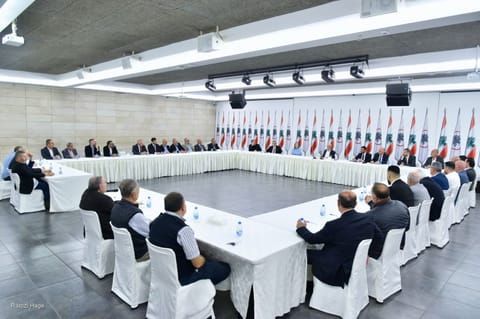
Lebanese Forces Party leader Samir Geagea met in Maarab with a delegation from the municipalities of the southern border towns and villages, including: Jadida Marjeyoun Mayor Sari Ghlamieh and municipal council member Rayan Barakat; Qlayaa Mayor Hanna Daher and municipal council member Gerard Rizk; Burj al-Muluk Mayor Elie Sleiman; Deir Mimas Mayor Suheil Abu Jamra and municipal council member Raif al-Hourani; Kawkaba Mayor Elie Abu Naqoul and his deputy Ziad Fares; Rachaya al-Foukhar Mayor Pierre Atallah and his deputy Samir Murad; Bouayda mukhtar Touma Makrous; Abu Qamha mukhtar Michel Abu Rashed; Hasbaya mukhtar Naeem Lahham; Rmeish municipal members Hanna al-Abdoush and Camille al-Hajj, along with social activist George al-Amil; Ain Ebel deputy mayor Ayman Barakat and municipal council member Charbel Hasrouni; social activist Bashir Diab; Debel deputy mayor Hanna Hannoun and municipal council member George Younes; Qawzah mukhtar Caesar Rizk; former Qawzah mayor Farid Felfli; mukhtar of the Maronite quarter in Tyre Youssef Salim Barbour; Derdghaya municipal members Antoine Elias al-Khoury and Haitham Mikhail Raad; and former Alma al-Shaab municipal member and social activist Hanna Zarab.
Also taking part in the meeting were Strong Republic bloc MP Ghada Ayoub, Assistant Secretary for Regional Affairs George Eid, the party leader’s envoy to Marjeyoun Fadi Salameh, head of the South Crisis Management Committee Jean al-Alam, Lebanese Forces coordinator in Tyre Fouad Ouda, official in charge of relations with the security services Imad Khoury, representative of the Bint Jbeil coordinatorate Elie al-Amil, and head of development at the Lebanese Forces Jean Khachan.
The Lebanese Forces leader opened the meeting with a brief presentation of all the contacts and steps the party has taken since the outbreak of the crisis until now in order to help the residents of the steadfast villages remain in their homes. He told them that from the outset he had contacted U.S. officials and urged them to ask Israel not to target the residents of these towns and to refrain from harassing them.
The party leader then made contacts with the Army Command and the Internal Security Forces in an attempt to keep the army and the ISF alongside the residents in these villages, but the Ministries of Defense and Interior did not deem that appropriate because supply lines for the army and the ISF would not be feasible. Lebanese Forces officials, each according to his area of responsibility, then contacted international organizations working on the humanitarian front in order to secure the daily living needs of the residents of the villages concerned, including food and medical supplies. In addition, the Ministry of Energy undertook to provide the required quantities of diesel fuel for these villages. Contacts are also still ongoing with many state administrations through MP Ayoub, in coordination with the coordinators of the areas concerned, the head of the crisis management committee, and the other party officials, to follow up on the requests of those towns.
After the delegation thanked the Lebanese Forces leader for his efforts and close follow-up of the conditions in their villages, each of the mayors present outlined the concerns and affairs of his town. Geagea stressed to them that this issue concerns him personally and ranks among his priorities.
He also praised the steadfastness of the residents of the border strip areas, describing this “resistant stance” as “heroic,” especially amid the anxiety, fear, and lack of even the minimum essential needs they are facing.
He promised to stand by them in this crisis and to continue working with the entire relevant Lebanese Forces team to secure the requirements of these towns at all levels.
In conclusion, the Lebanese Forces leader reassured the delegation of mayors and mukhtars that the problems they had presented to him would be addressed, once again commending the residents’ strength, steadfastness, and coordination among themselves.