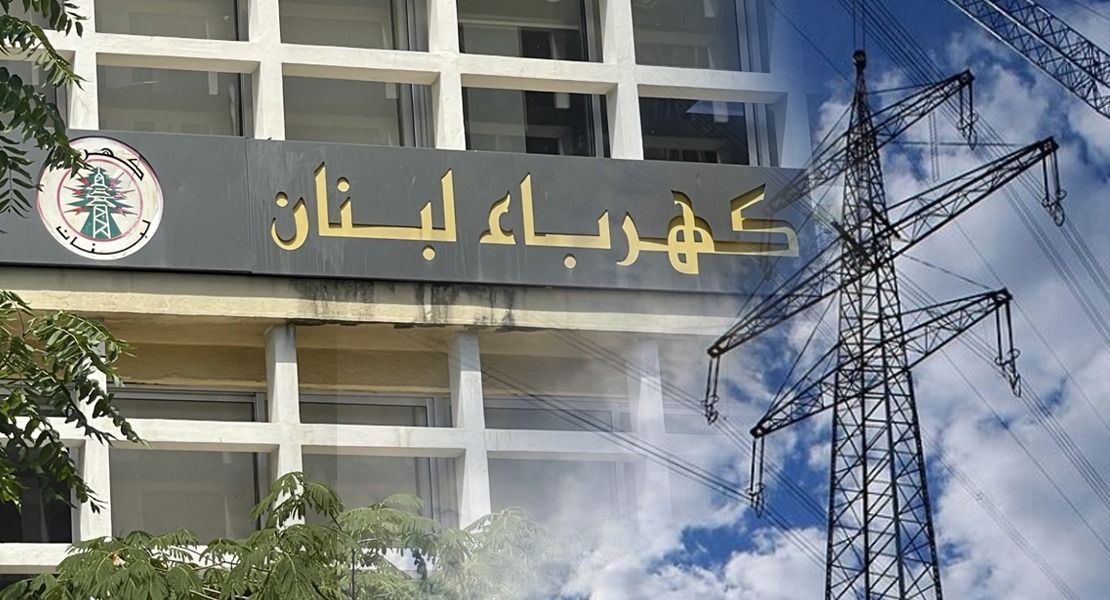
The media office of Electricité du Liban (EDL) confirmed to An-Nahar that oil prices directly affect electricity tariffs, given their close link to production costs. Despite this, there is currently no official discussion of adjusting the tariff, which remains unchanged: the first 100 kWh are subsidized at $0.10, while consumption exceeding 100 kWh is charged at $0.27 per kWh.
The tariff was originally set based on an assumed price of around $1,000 per ton of gas oil and $580 per ton of fuel oil—levels that have now been significantly exceeded. Its implementation was also tied to three key commitments approved by the Board of Directors: the state covering the cost of one million tons of Iraqi fuel annually, a process that has been halted since the current government took office in February 2025; the settlement of public sector dues, including government departments, public institutions, and independent entities, which average about $110 million annually, with accumulated arrears reaching approximately $300 million; and the payment of Palestinian refugee camp dues estimated at around $30 million annually, based on four hours of daily electricity supply.
However, these commitments have not been fulfilled, leading to a clear imbalance in the financial framework upon which the tariff was built. Under these conditions, EDL is facing increasing pressure and the likelihood of actual losses, driven by two main factors: rising production costs linked to oil prices, and declining revenue collection.
Despite this reality, the institution confirms that it is not currently moving toward a tariff adjustment.
Instead, it is managing the crisis by maintaining an average electricity supply of around six hours per day, securing fuel through self-financing, and prioritizing essential facilities such as ports, airports, water, sanitation, and prisons. The current fuel stock is sufficient for more than one month, under a flexible operational strategy aimed at preventing collapse.
Collection Crisis and Impact of Displacement
The most pressing challenge remains revenue collection, which has been severely affected by economic deterioration, rising living costs, security conditions, and internal displacement that has altered demographic distribution. Several areas—particularly the South, Beirut’s southern suburbs, and northern Bekaa—have witnessed a near-total halt in bill collection, leading to a noticeable drop in revenues and raising concerns about EDL’s ability to sustain self-financing.
Losses and Legal Challenges
Electricity losses, especially non-technical losses such as illegal connections, remain a major issue. Efforts to expand the powers of service provider companies face legal obstacles, as core authorities remain exclusively within EDL and cannot be transferred without legislative action. Accordingly, the institution stresses that meaningful progress in this area requires the adoption of new laws or the activation of Law 462 and the establishment of a regulatory authority.
At the same time, EDL confirms that collection efforts, anti-encroachment campaigns, and disconnection measures have been intensified under existing contracts, in accordance with applicable laws and regulations.
In this context, the Zahle model is being considered as a potential alternative; however, its nationwide implementation would require a clear legal framework, either through new legislation passed by Parliament or through the application of Law 462.
This raises broader questions about the state’s readiness to adopt decentralization in the electricity sector and whether it could serve as a viable path toward reform.