Hate speech is any form of expression — written, spoken, or online — that attacks, insults, or incites hostility against a person or group because of their identity or characteristics, such as religion, race, skin color, nationality, gender, social background, or political affiliation.
Examples include the use of offensive language, calls to exclude certain groups from society, or sharing degrading jokes and images targeting a community.
In Lebanon, amid the war that has been raging since March 2, hate speech has spread widely through the rhetoric and platforms of certain political parties and media figures. This discourse has targeted regions, sects, the state, and even the military institution, raising fears of a return to civil war.
Ogarit Younan, a pioneer in the fields of nonviolence and human rights, warns about the dangers of hate speech, saying: “It begins with the language of fear, passes through social isolation, and can ultimately explode into security violence.”
Meanwhile, Widad Halawani fears similarities with the 1975 Lebanese Civil War, stating: “Differences are natural, but they should never turn into conflict and fighting… Do we want new missing persons?”
Incitement is often fueled by the intersection of three forces: political authority, the media, and social media audiences, making the danger deeply rooted and potentially explosive.
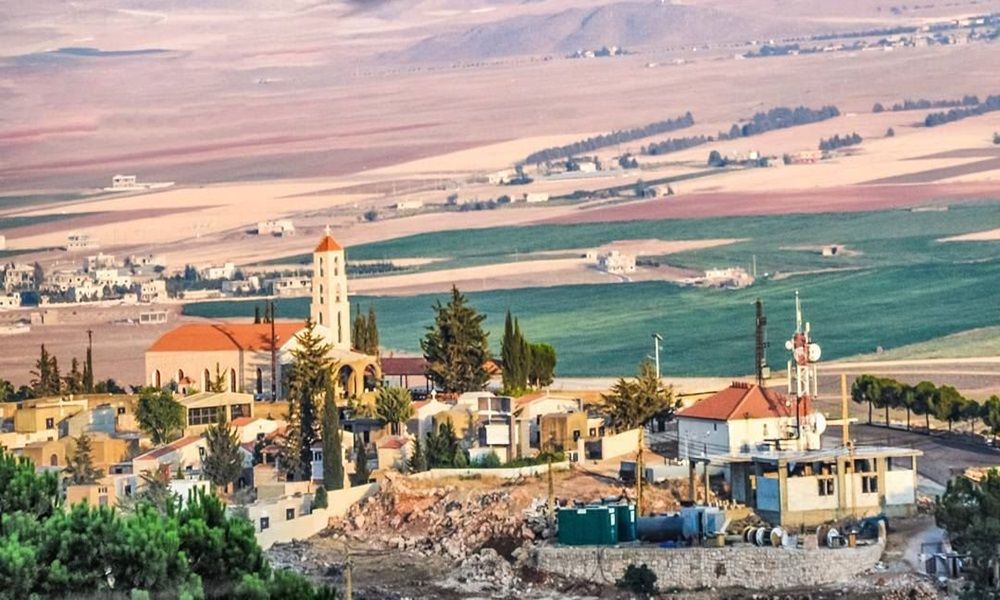
Although a ceasefire was eventually announced in the latest war on Lebanon, one exemplary town stood out for resisting division and hatred: Deir El Ahmar in the Baalbek-Hermel region. While inflammatory rhetoric against displaced families escalated in several Lebanese areas, Deir El Ahmar chose a different path by opening its doors to those fleeing violence.
We met with Tony Hobshi, who rejected rumors claiming that residents had blocked the road leading into the town during the first day of the war. On the contrary, he explained, people gathered at the town entrance to welcome the displaced.
“We consider the Northern Bekaa as one region,” Hobshi said, “without distinguishing between Shiite, Sunni, or Christian. Even during the height of the 1975 war, despite some minor tensions, we remained united.
Whenever insecurity strikes, people know that the Deir El Ahmar Municipal Union is a safe refuge — the house is theirs.”
He added: “It is not in our nature to ask anyone about their sect. Our homes are open to the people of Baalbek, just as theirs would be open to us if we ever felt threatened. We breathe the same air and belong to the same land.”
Hobshi also spoke about the folkloric group “Rimah Deir El Ahmar,” which organized dabke performances for displaced children during the first days of Eid al-Fitr in shelter centers, in an effort to bring joy amid fear and uncertainty.
Organizations such as Caritas Lebanon, scout groups, emergency response teams, women’s associations, agricultural cooperatives, and church-affiliated charities all contributed despite limited resources. Volunteers repackaged cleaning supplies into smaller portions to distribute fairly among displaced families.
According to Hobshi, around 24,000 displaced people were sheltered in 2024, with nearly 60–70% hosted in Deir El Ahmar itself. In 2026, the number dropped to around 7,000–8,000 people, including 4,500 housed in vocational institutes, public schools, and the hall of Saint Nohra Church after a nearby school was damaged in an airstrike on Boudai.
Despite the humanitarian response, the municipality struggled under enormous financial pressure. Forty new workers had to be hired to secure shelters and organize operations, while fuel, waste management, and electricity costs increased dramatically.
Hobshi emphasized that the municipality received only limited state assistance. “Whatever the cost,” he said, “the displaced families and the people of Deir El Ahmar are one and the same.”
During our visit, we also met Mansour Imad, who hosted a family displaced from Boudai. He rejected even calling them “displaced.”
“They are not guests,” he said. “They are family. This relationship did not begin with the war — it has existed for decades.”
He described the Bekaa as a land unfairly stereotyped by outsiders: “People only speak about tribes and lawlessness, but they should come and see the Bekaa’s true face — generosity, dignity, and coexistence.”
Among the displaced families was Abbas Assaf and his relatives. Abbas described the experience not as displacement, but as hospitality and belonging: “We feel as if we have known each other for decades.”
An elderly woman from Boudai, known as Umm Ali, spoke proudly from the shelter hall of Saint Nohra Church. “We and the people of Deir El Ahmar are one family,” she said. “We grew up together in the same soil and air. Whoever tries to spread hatred elsewhere can try in vain — it will never succeed here.”
Despite years of neglect and deprivation, the events in Deir El Ahmar shattered many stereotypes about the people of Baalbek-Hermel. In the face of war and sectarian incitement, the town offered a different language — one of solidarity, coexistence, and shared humanity.
تابع آخر الأخبار أولاً بأول على قناتنا في واتساب
تابعنا