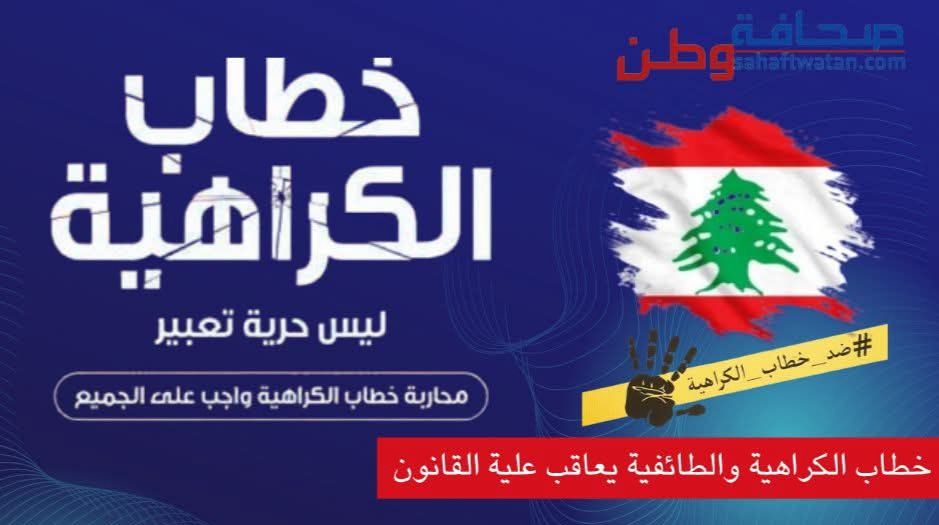
Recently, videos and posts containing inflammatory rhetoric have been proliferating on social media, promoting sectarianism and calling for the excommunication of other religions and sects, in a scene that threatens what remains of national cohesion in a country founded on diversity and coexistence.
This discourse, which uses virtual platforms as an arena for settling ideological scores, is raising serious fears of the disintegration of the social fabric and the return of sectarian alignments for which Lebanon paid a heavy price in earlier stages of its history.
Lebanon is a country of coexistence... but!
Observers agree that Lebanon collapses morally and socially when diversity turns from a source of richness into a weapon of strife. The country that has long prided itself on its religious pluralism is today witnessing the organized infiltration of hate speech through online platforms, amid an almost complete absence of legal accountability.
Experts in constitutional affairs believe that such rhetoric does not express freedom of opinion so much as it constitutes direct incitement to division, which is wholly incompatible with both the spirit of the Lebanese constitution and its explicit provisions.
What does the Lebanese constitution say about sectarianism?
The Lebanese constitution, drafted to guarantee coexistence, devotes several clear articles obliging the state to combat sectarianism and protect freedom of belief and equality among citizens.
Article 7 states that “all Lebanese are equal before the law. They equally enjoy civil and political rights and equally are bound by public obligations and duties without any distinction among them.”
Article 9 guarantees freedom of belief and prohibits any infringement on the sanctity of religions or sects.
Article 95 obliges Parliament and the government to work toward abolishing political sectarianism according to a phased plan, and to form a national committee tasked with laying down the executive foundations for that.
As for the preamble to the constitution, it affirms that “the abolition of political sectarianism is a basic national goal.”
These texts are not mere slogans, but constitutional obligations requiring the state to safeguard national unity and prosecute anyone who threatens it through incitement or takfiri rhetoric.
Despite the clarity of the constitution, the Lebanese reality remains far from applying its principles.
Sectarianism still controls appointments, political discourse, and even some religious platforms, creating a state of dangerous division within society.
Legal sources indicate that hate speech is not punished seriously, and that the relevant authorities often ignore prosecutions under the pretext of freedom of expression, even though the constitution itself restricts freedom when it turns into a tool of sedition.
Where is the state in all of this?
Amid this troubling scene, Lebanese are asking:
Why does the state not move to rein in the digital and intellectual chaos threatening its very existence?
And why are the constitutional provisions criminalizing discrimination and incitement not being activated?
Leniency in confronting these practices could lead the country to internal conflict, for extremist thought is not confronted with silence, but with law, awareness, and accountability.
In the end, Lebanon, the country of message and diversity, can preserve its existence only by applying the constitution in word and deed.
If the texts are clear in calling for the abolition of sectarianism and the consolidation of equality, then what is required today is firm action by the state against anyone who incites hatred or tampers with the unity of the nation.
So how long will the laws remain suspended, and the constitution mere ink on paper?
And why does the state not enforce the constitution and hold accountable those who sow discord among the sons of one الوطن الواحد?