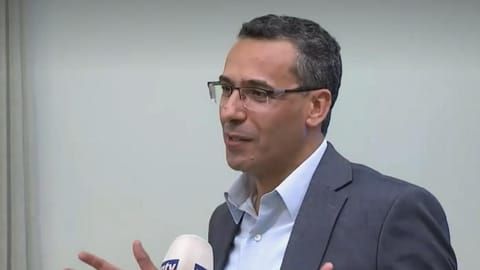
Agriculture Minister Nizar Hani held a series of meetings with international and local parties focused on broadening prospects for cooperation, activating development support programs, and launching sustainable initiatives that respond to current challenges, as part of ongoing efforts to strengthen the resilience of the agricultural sector and advance its development.
Minister Hani received a delegation from the Turkish Cooperation and Coordination Agency (TIKA), headed by its coordinator in Lebanon, Burak Bordakol, accompanied by Mr. Mohammad Maqsoud and Deputy General Coordinator Ms. Serap, during which ways to develop bilateral cooperation in the agricultural field were discussed.
During the meeting, the minister presented an in-depth analytical overview of the state of the agricultural sector, particularly in light of the challenges imposed by the recent aggression. He reviewed the scale of damage affecting agricultural production in the South and Baalbek, as well as the emergency response mechanisms adopted by the ministry, including the relocation of livestock, beehives, and seedlings from affected areas, in addition to direct and indirect support programs implemented in cooperation with international partners and organizations, with the aim of protecting livelihoods and enhancing farmers’ ability to continue.
Hani stressed “the importance of building strategic partnerships with the Turkish side, given Turkey’s advanced expertise in agricultural and development fields,” welcoming the expansion of areas of cooperation in a way that serves shared interests.
For his part, TIKA’s head of mission in Lebanon, Burak Bordakol, emphasized the agency’s “full readiness to support sustainable development projects in cooperation with the Ministry of Agriculture, in a way that enhances food security and rural development.”
It was agreed to launch a preparatory track for concluding a comprehensive cooperation agreement between the two sides, covering key areas including the exchange of technical expertise, training Lebanese personnel in Turkey, organizing specialized field visits, supporting and developing the Ministry of Agriculture’s nurseries, empowering rural communities, and enhancing participation in international agricultural exhibitions. It was also agreed to continue technical consultations in subsequent meetings to establish clear implementation mechanisms that ensure the sustainability and effectiveness of cooperation.
On the local level, Hani met with MP Bilal Abdullah, in the presence of Siblinne Factory Director General Adib Al-Hashem, Siblinne Mayor Dr. Mohammad Shaaban, and a specialized technical team.
Hani opened the meeting by affirming the pivotal role of the farmers’ registry as a fundamental regulatory tool for developing agricultural policies, stressing the ministry’s “commitment to supporting various initiatives that enhance production and sustainability.”
The discussion focused on a set of development and environmental projects, most notably the construction of agricultural ponds to collect rainwater and improve water resource management; the rehabilitation of a green belt planted with carob and olive trees to serve as a windbreak and environmental outlet, with the possibility of establishing a public park within it; in addition to rehabilitating quarry sites over an area estimated at 150,000 square meters, and restoring five plots of land in the vicinity of the Siblinne Factory in a way that reassigns them to environmental and productive use.
It was also agreed to dispatch a team of technical experts from the Ministry of Agriculture to conduct the necessary studies and provide technical support, alongside the formation of a joint follow-up committee to ensure the effective implementation of the projects in line with a sustainable vision.
In a statement, the Ministry of Agriculture said that “these meetings confirm the ministry’s strategic orientation toward enhancing openness to international partnerships and activating cooperation with local entities, in a way that contributes to rebuilding the agricultural sector on more solid and sustainable foundations, strengthens food security, and supports rural communities in confronting economic and environmental challenges.”