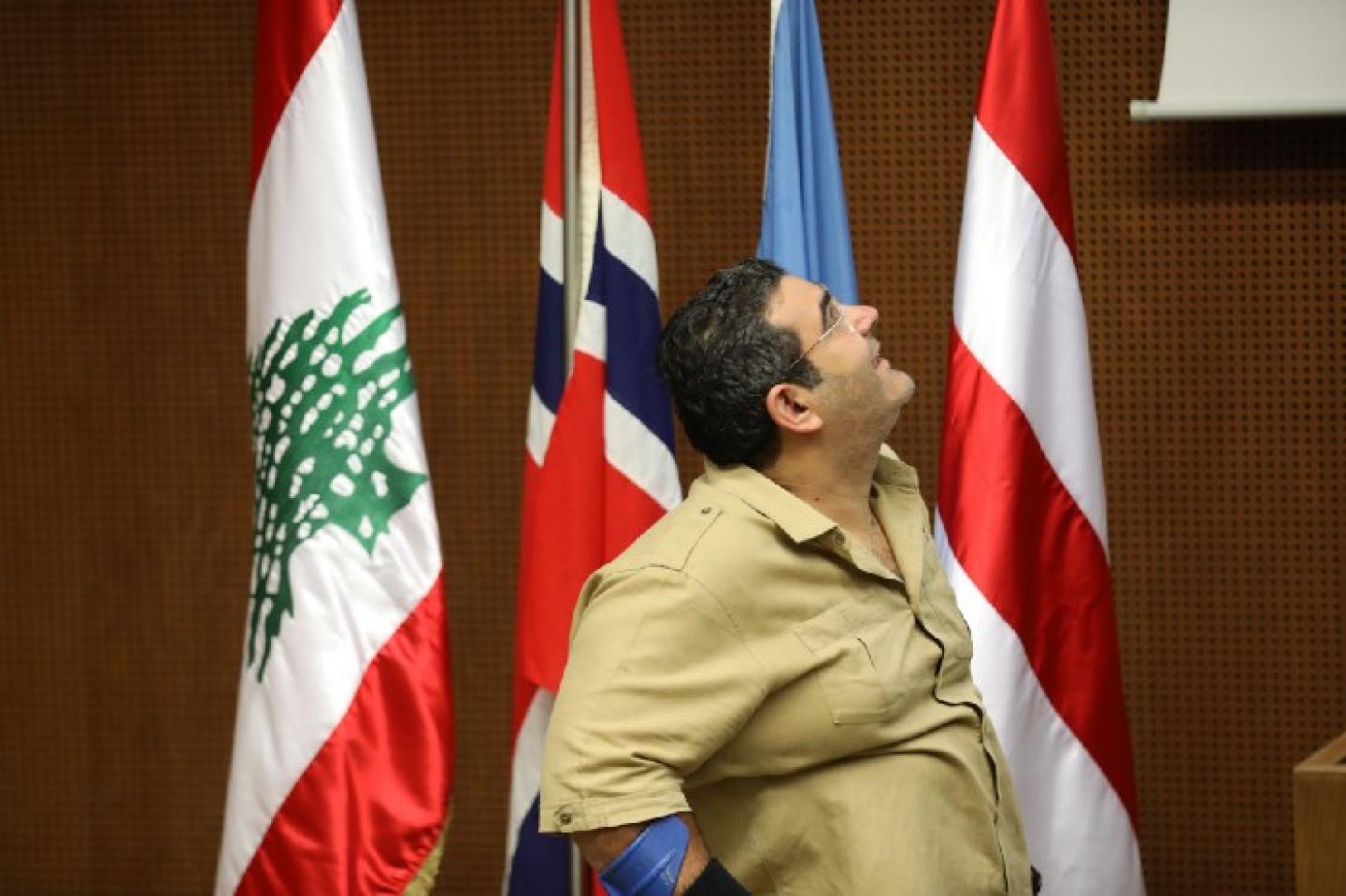
Lebanese athlete Michael Haddad, who lives with paralysis affecting 75 percent of his body, completed a sea crossing of around 15 hours from the Lebanese coast to Cyprus, taking advantage of a brief lull in the war between Lebanon and Israel to transform a high-risk experience into a global message about the place of disability in times of conflict and the need to rethink how it is approached.
Haddad set off at 3 a.m. on April 26 from the Lebanese coast and arrived in Larnaca at around 7 p.m. the same day aboard a sailing boat captained by Elio Chahoud, with support from Fadi Abou Joudeh, while Lida Challoub and Dolly Mikhael documented the course of the journey.
The adventure unfolded amid tense regional conditions, as Haddad, despite his paralysis, faced long hours of challenges on the open sea, relying on neuromotor techniques he had developed over years that helped him maintain balance and endurance throughout the trip. But the goal, he stressed, was not the physical feat in itself.
Through this initiative, Haddad sought to dismantle traditional narratives that confine disability to being merely a consequence of conflict, and to reintroduce it as a central element in understanding the human impact of war, opening new paths for dialogue, participation and peacebuilding.
After arriving in Cyprus, Haddad brought his message into the academic sphere through a discussion at the American University of Beirut – Cyprus branch in Paphos, attended by students, faculty and university administrators, focusing on redefining the place of disability within conflict contexts. He said: “Disability is not a marginal issue in times of conflict, but a gateway to understanding the human being and rebuilding dialogue.”
Opening the event, Dr. Malek Tabbal said: “What Michael is presenting challenges conventional notions of resilience and human capacity, and shows how what is seen as a limitation can become a driving force for change and engagement.”
In his closing remarks, Dr. Wassim El Hajj said: “Universities have a role that goes beyond education, namely creating spaces where new forms of dialogue can emerge. This initiative reflects the kind of engagement the world needs today.”
The initiative, which began in the eastern Mediterranean, aims to expand globally through dialogue platforms and research frameworks that integrate lived experience into conflict analysis and policymaking, by bringing together academic institutions, decision-makers and humanitarian actors alongside people affected by conflict.
It seeks to reshape perceptions of disability from a condition associated with vulnerability into an active role in understanding conflicts and contributing to their resolution.
Haddad concluded by stressing that “this journey represents the beginning of a broader path, carrying the message that even in contexts of division and instability, movement toward deeper understanding and more humane dialogue remains possible.”