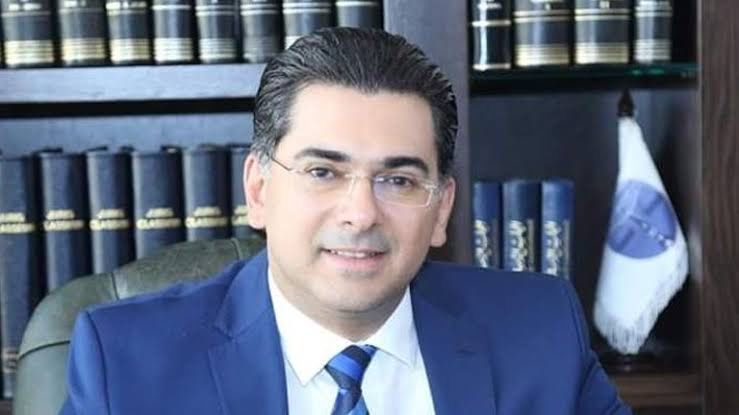
Information Minister Paul Morkos stressed the need for a ceasefire and an end to Israeli attacks, considering that what is taking place has not yet been met with the necessary deterrence, making this demand a political and humanitarian priority at the present stage.
In an intervention during the program “Saraya Dialogues,” Morkos explained that President Joseph Aoun considers a ceasefire a fundamental entry point in any negotiating track aimed at achieving Lebanon’s sovereign demands.
He noted that meetings will be held at the end of the current month with the participation of Lebanese officers, pointing out that this track is not independent in itself, but rather constitutes a technical component linked to cooperation with the United States, within the framework of supporting the objectives Lebanon is pursuing regarding an Israeli withdrawal, the liberation of occupied land and prisoners, leading to the return of the displaced and reconstruction.
Morkos affirmed that there is American understanding of the Lebanese position, noting that coordination exists among Lebanon’s three presidencies in this track, and that Parliament Speaker Nabih Berri has been briefed on the details of the latest rounds of negotiations.
On the issue of targeting journalists, Morkos stressed that attacks on civilians, ambulance crews, and journalists while carrying out their duties constitute a “flagrant violation of international humanitarian law,” particularly the Geneva Conventions and their protocols, especially Article 79 concerning the protection of journalists in armed conflicts.
He explained that the Ministry of Information, in cooperation with official and international bodies, has worked to document the violations and submit them to the relevant forums, even though the authority to pursue international litigation does not fall within the ministry’s direct remit. He added that coordination has taken place with Lebanon’s missions to the Human Rights Council and UNESCO, in addition to international organizations, concerned embassies, and the International Committee of the Red Cross.
Morkos revealed ongoing diplomatic and legal action, accompanied by protest memoranda and detailed documentation, noting that the Office of the United Nations High Commissioner for Human Rights will soon visit Lebanon as part of preparations for a fact-finding mission into these violations.
In a related context, he also addressed the ministry’s efforts to confront hate speech on social media, calling for the responsible use of these platforms and emphasizing that the goal is to promote balanced discourse and protect civil peace, not to restrict freedom of expression.
He also stressed the importance of passing the new media law, given that it includes provisions regulating hate speech, noting that the rapid spread of fake news requires strengthening the role of official media and coordination with the judiciary within legal frameworks.
Morkos also discussed the development of state media, pointing to Lebanon’s improved global media ranking and efforts to strengthen the independence of Radio Lebanon and develop its archive and programming, in addition to cooperation projects with Lebanese universities to launch training initiatives in media, artificial intelligence, and media literacy.
He concluded by pointing to the warm Arab and international reception of Lebanese media, and renewed calls for Beirut to host the Arab Media Forum, reflecting Lebanon’s cultural and media role in the region.
تابع آخر الأخبار أولاً بأول على قناتنا في واتساب
تابعنا